


“Don’t worship Allah so He may give you. Rather, worship Him so He may be pleased. For when He is pleased, He will astonish you with His Gifts.”
By the dawn
And the ten nights
And the even and the odd
O you tranquil soul!
Return to your Lord, well-pleased and pleasing
[al-Fajr: 1-3; 27-28]

Loftiness is attained in accordance to one’s struggles,
And whoever seeks nobility, remains vigilant by night.
Whoever wishes to achieve without due effort,
Will waste their life seeking what’s impossible.
You search for glory and yet you sleep at night,
It’s only the seeker of pearls who dives deep into the sea.
– Imam al-Shafi’i, al-Diwan
New Posts
About
Learn more about Fajr Literary; the site, the person, and the aims & objectives
Learning Arabic
Fajr Literary Store
A place to buy original books (paperbacks and ebooks), download free books or purchase online courses and services.
Get in touch
Click here to contact Fajr Literary
Latest Post
Of Milk, Dates, and Grapes: The Subtle Language of Surat al-Nahl
“And indeed, for you in grazing livestock is a lesson. We give you drink from what is in their bellies – between excretion and blood – pure milk, palatable to drinkers.” [al-Nahl: 66]

Surah al-Nahl (The Bee) is a lengthy but beautiful chapter which mentions many of the blessings that Allah `azza wa jall has bestowed upon Mankind. Of those blessings is the produce of animals which become a provision for us e.g. milk, meat, honey, fur etc.
Now interestingly, in this verse, Allah `azza wa jall uses the verb نسقيكم (nusqeekum) when speaking about the provision milk, meaning: ‘We give it to you as a drink.’ The point here is that as humans, we have no power whatsoever in bringing forth milk from these cattle. From between the rapid, intricate, and complex anatomy of the animal’s internal (between blood and waste), Allah `azza wa jall allows the production of pure nutritious milk, and He grants it to us, the sharibeen, to drink it. So He attributes this merciful and kind act to Himself.
Now, let’s look at the next verse…

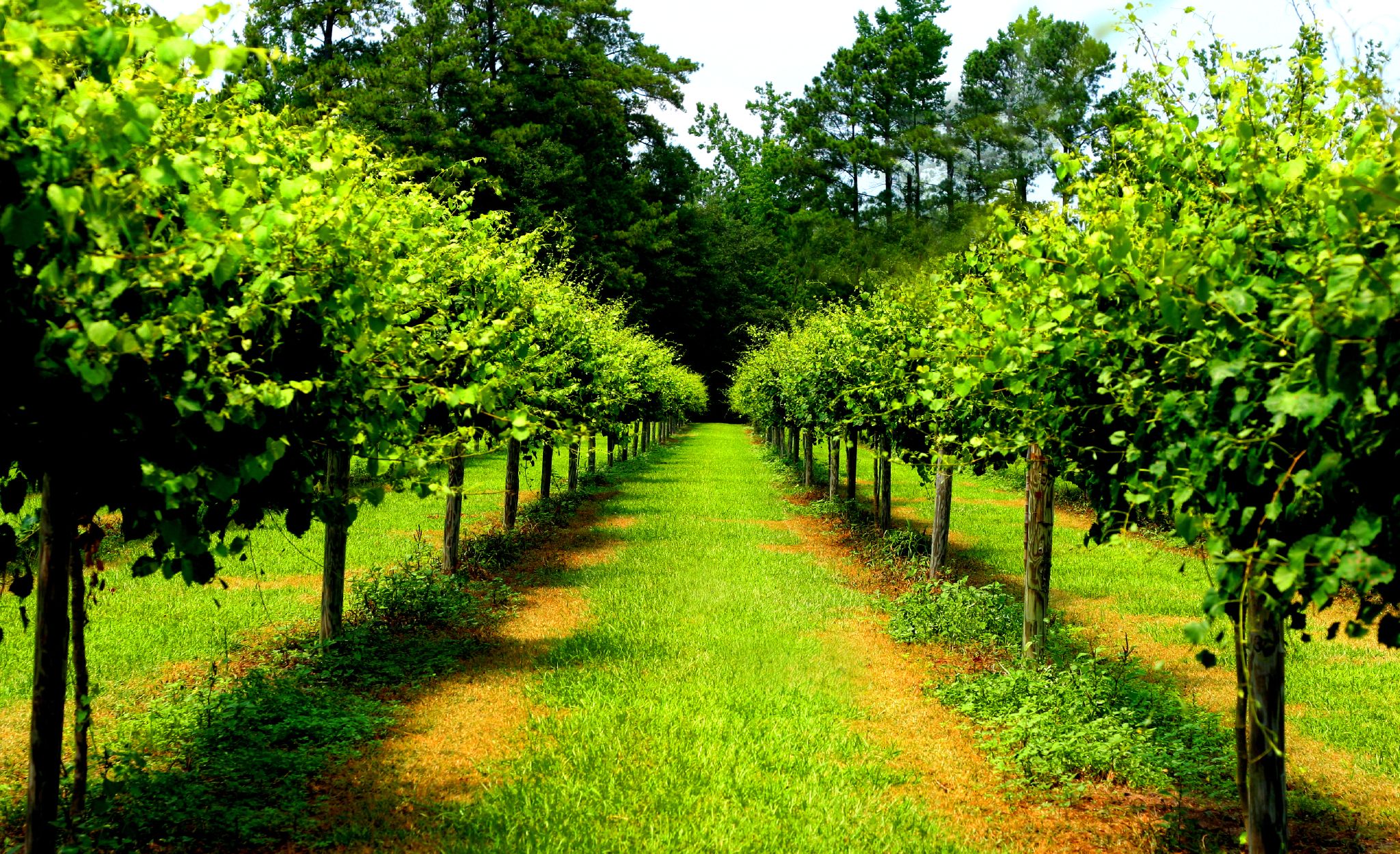
“And from the fruits of the palm trees and grapevines you take intoxicant and good provision. Indeed in that is a sign for a people who reason.” [al-Nahl: 67]
Bearing in mind that this verse was revealed in Makkah, before the prohibition of alcohol, we see how Allah `azza wa jall draws the people’s attention to the blessing of fruits (namely, dates and grapes) which they’ve long used to make wine. If you pay close attention to the Arabic, you’ll see that the verb is drastically different to the one in the previous verse…
Here, Allah `azza wa jall says that from these blessings of fruit, YOU create intoxication. He does not attribute this act to Himself. Then He says after that, that you also take from it a goodly provision (rizqan hasanan). Did you notice how the adjective ‘goodly’ is only mentioned alongside the provision (rizq) and not the intoxication (sakar)? Why?
The wisdom goes back to the fact that this is a Makkan Surah and wine had not yet been prohibited, but subhan’Allah, Allah places this subtle sentence structure as a preparation for the people; to spark their senses that something is different here about intoxication, that something is not quite wholesome. Allah `azza wa jall does not condemn it, but He also does not praise it like He did the provision (rizq). In a nutshell, He is mentally preparing the people for the prohibition of wine that will occur soon enough. The scholars say that the Sahabah knew wine would soon be prohibited, and those who had appreciation and depth of understanding with regards to the Qur’an knew from this subtle hint.
Many of us know that wine was prohibited in stages, but I’m sure not many of us (including me) realised that before the initial stage of prohibition, there was another stage where the believers were being prepared mentally, and that is via the subtle language of the Qur’an and the use of words/structure like in this verse. Allahu Akbar 🙂